

In March 2026, renters expect answers in minutes, not hours. They want to tour on their schedule, apply from their phone, and get clear next steps without chasing your office. When that doesn’t happen, they bounce to the next community.
That’s why AI leasing is showing up in more portfolios. Used well, it helps teams respond faster, price smarter, and reduce vacancy loss. It also reduces the “busywork tax” that burns out good onsite staff.
The core idea is simple: AI leasing works best when it supports the onsite team, not when it tries to replace them. Below, we’ll walk through where AI is changing leasing the most: lead response, touring, pricing, screening, paperwork, and the human side of running it all.
From first click to signed lease, AI speeds up every step
Think of leasing like a funnel. Every delay widens the leaks. A missed call turns into a lost tour. A slow follow-up becomes a competitor’s signed lease. AI helps by making the basics consistent, even when the office is slammed.
Here’s the leasing journey in plain terms: inquiry, follow-up, tour, application, approval, lease signing. The biggest gains usually come from speed-to-lead and consistency across phone, text, email, and web chat.
A quick way to frame the value is to map steps to bottlenecks:
| Leasing step | Where teams get stuck | What AI can handle |
|---|---|---|
| Inquiry | After-hours questions, missed calls | Instant replies, FAQ answers |
| Follow-up | Inconsistent outreach, dropped leads | Auto follow-ups, reminders |
| Tour scheduling | Calendar back-and-forth | Scheduling, confirmations |
| Application | Confusing steps, incomplete docs | Guided next steps, checks |
| Approval | Manual review delays | Summaries, fraud signals |
| Lease signing | Missing initials, slow returns | Doc checks, nudges |
The takeaway: AI improves outcomes when it removes wait time and reduces human forgetfulness, while staff stays focused on trust, empathy, and closing.
For a broader snapshot of how AI tools are being used across property workflows (not just leasing), see this 2026 guide to AI-powered property management platforms.
24/7 leasing assistants that answer questions and book tours
Most prospect questions are predictable. “Do you have anything for June?” “How much is parking?” “What’s the pet policy?” “What income do I need?” The problem isn’t the questions. It’s that they arrive at 9:30 pm, on Sunday mornings, or during a lunch rush.
AI leasing assistants, in chat and voice form, can cover that gap. Tools like AppFolio’s Lisa, STAN AI, and RentEngine sit on your website, phone line, or SMS. They answer FAQs, share availability rules, and push prospects toward the next best action, usually a tour.
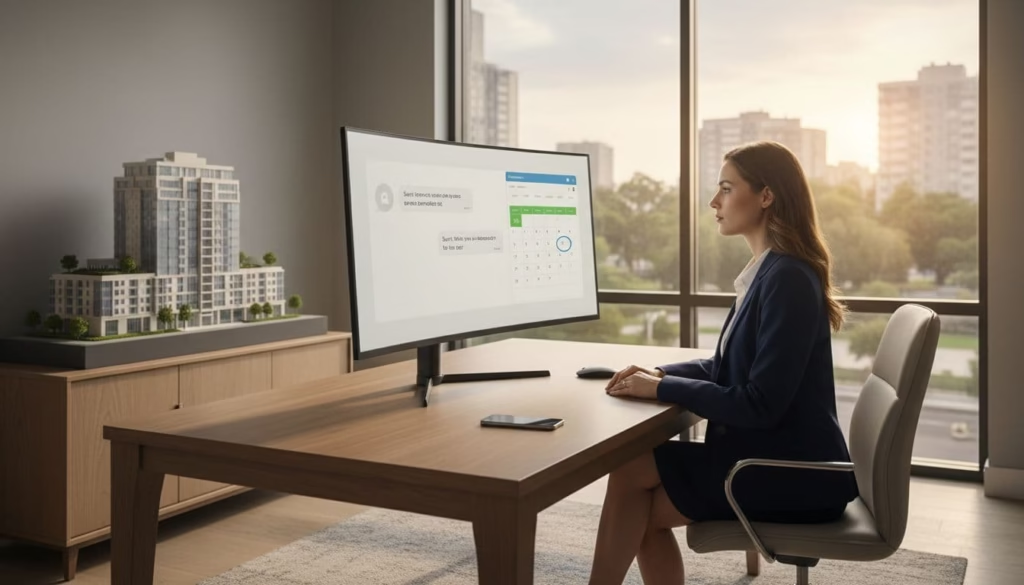
The practical wins owners and operators tend to notice first:
- Fewer missed leads because the bot doesn’t sleep or take breaks.
- Faster response times at night and on weekends.
- Less repetition for staff, so phones don’t feel like a treadmill.
- Cleaner handoffs, because the assistant can capture move-in date, unit preferences, pets, and tour availability before a human steps in.
Still, “24/7” only helps if the assistant can book a real appointment, not just say, “We’ll get back to you.” That means tight integration with your calendar rules and your property management system, plus an escalation path when questions get nuanced.
If you want a current view of what leasing teams are automating this year, Funnel Leasing’s breakdown of AI trends for multifamily leasing pros is a useful reference point.
Smarter showings, including self-guided tours with better controls
Touring is where interest turns into intent. It’s also where scheduling friction can quietly add days of vacancy. AI helps most in two places: scheduling efficiency and lead prioritization.
On scheduling, AI can propose tour times, coordinate calendars, send confirmations, and trigger reminders. It can also follow up automatically when someone no-shows, which is common and expensive.
On prioritization, AI can flag which leads look most “ready,” based on response behavior (fast replies, consistent details, completed pre-qual questions). That doesn’t mean it should ignore other leads, but it can help staff decide who to call first when time is tight.
Self-guided tours add another layer. Many operators now pair self-guided access with smart locks and identity checks. The goal isn’t to remove humans. It’s to expand touring hours while keeping guardrails in place:
- controlled time windows
- access logging (who, when, where)
- alerts for abnormal patterns
- clear escalation if a door or lock fails

Operators often describe the impact in simple terms: more tours at the edges of the day, fewer “call us to schedule” drop-offs, and fewer vacancy days between move-out and move-in. The value compounds when your scheduling workflow resembles what services like Showdigs popularized, and your access workflow resembles what smart access platforms like SmartRent enabled.
Quick gut check: if your best closer spends an hour a day playing calendar ping-pong, AI can usually give that hour back.
AI helps set rent prices and reduce vacancy days without guessing
Pricing used to be a monthly meeting and a market survey. In many markets, that’s not enough now. Demand shifts quickly, competitors adjust daily, and concessions can change conversion rates overnight.
Modern revenue management systems can evaluate dozens (sometimes hundreds) of factors and suggest pricing changes at a much tighter cadence. In practice, AI leasing and AI revenue management connect because leasing teams feel the consequences of pricing decisions first. If pricing is off, your lead volume and tour-to-lease conversion tell you fast.
Benchmarks you’ll hear in the industry (and in vendor case studies) often land in the range of low single-digit revenue lift and meaningful reductions in vacancy days. Results vary by market, asset quality, comp behavior, and how disciplined the onsite execution is.
For a grounded explanation of how predictive pricing works and why small pricing errors compound at scale, this AI predictive rent pricing guide for apartments lays out the concept clearly.
Daily pricing suggestions based on demand, comps, and unit-level details
Daily suggestions sound scary until you treat them like what they are: recommendations. AI does well at surfacing patterns humans miss, especially at unit level.
Common inputs include:
- competitor pricing and concessions (where data is available)
- website traffic and lead volume
- tour set rate and tour-to-lease conversion
- days-on-market by floor plan and unit
- lease trade-outs and renewal patterns
- seasonality and upcoming expiration waves
- unit attributes (view, floor, renovation level)
Where teams get burned is letting “daily suggestions” become “daily chaos.” The safer approach is to put guardrails around pricing moves and approvals. For example, you might cap changes to a certain percentage per day, require approval above a threshold, and avoid changes inside a short window before a scheduled tour.
In other words, don’t hand the keys to autopilot. Put AI in the co-pilot seat and keep a human on the controls.
If you’re curious how widespread AI has become across multifamily systems (and where it’s showing up inside broader platforms), Rentana’s take on multifamily software with the best AI features is a helpful scan.
Forecasting and alerts that help operators act earlier
Pricing is one lever. Timing is another.
AI-driven alerts can flag issues earlier than weekly reports, especially when your team is busy and your portfolio is large. Good alerts are specific and tied to an action. Bad alerts are noise.
Useful “act now” signals often include:
- demand softening for a specific floor plan
- rising cancellations after application
- slow follow-up speed by channel or shift
- units at risk of long vacancy based on past patterns
- unusually low conversion from a specific listing source
When an alert fires, the response should be operational, not theoretical. That can mean adjusting price, improving listing photos, tightening the ad copy, opening more tour times, adding staffing coverage on peak days, or simply fixing a broken call routing rule.
The best operators treat alerts like smoke alarms. You don’t debate whether the alarm is annoying. You check the kitchen.
Better screening, fewer bottlenecks, and a smoother move-in
Applications are where excitement turns into paperwork. It’s also where friction can kill momentum. Prospects who were eager on tour day can go cold after two confusing emails and a request to re-upload documents.
AI helps here by speeding up review and keeping communication clear. It can also reduce manual errors, like missing signatures or mismatched names. That said, screening touches fair housing and high-stakes decisions, so the operating model matters as much as the tool.
The goal is straightforward: faster approvals when the file is clean, and faster escalation when it’s not.
Faster application review and fraud signals staff can actually use
AI can summarize an application packet, extract key fields, and highlight inconsistencies. That’s a big deal when staff is juggling phones, tours, renewals, and resident issues.
Signals AI can help spot include mismatched IDs, unusual document patterns, inconsistent income documentation, and repeated device or contact behaviors across applications. The point isn’t to accuse. It’s to help staff focus attention where risk is higher.
What AI shouldn’t do alone is make the final call. False positives happen. A legitimate applicant can look “odd” on paper for normal reasons (job change, relocation, non-traditional income). Your policy should spell out when a human review is required and how applicants can correct mistakes.
For operators thinking about accuracy and reducing wasted time from bad flags, SurfaceAI’s discussion of accuracy in multifamily AI tools offers a useful lens: measure the tool by outcomes, not by how “smart” it sounds.
Lease paperwork that is cleaner, with fewer mistakes and faster signing
Lease paperwork is where tiny mistakes create big delays. A missing initial forces a resend. A wrong date triggers confusion. A stale addendum can turn into a compliance headache.
Document automation and AI review tools can help by:
- pre-filling fields from the application
- checking for missing initials and signatures
- spotting conflicting terms across addenda
- sending reminders based on signing status
- creating clear staff notes so handoffs don’t break
Some teams also use lease review categories similar to SurfaceAI-style document intelligence to audit lease packets faster, especially during high-volume months.
The operator benefit is less back-and-forth and fewer move-in day surprises. Prospects feel it too, because the process looks organized. That trust often shows up later in renewals.
AI does not replace leasing teams, it changes what great teams do
Let’s address the worry head-on. AI is changing tasks, not removing the need for good people. If anything, strong leasing staff becomes more valuable because the job shifts toward what machines can’t do well.
AI can answer “What’s your pet fee?” quickly. It can’t read a prospect’s hesitation and address the real concern. It also can’t build local trust when someone moves across the country and feels unsure about the neighborhood.
So the best outcome looks like this: AI handles repetitive work, while your team spends more time on relationships, exceptions, and community experience.
This mindset shift matters for performance too. If you measure staff only by “calls answered,” AI will look like a threat. If you measure by conversion, resident fit, and experience, AI looks like support.
For another view of where AI fits across property operations (including how teams structure adoption), Buildium’s roundup of AI property management tools in 2026 provides solid context.
Think of AI as an extra employee that needs onboarding and supervision
AI behaves less like software and more like a new hire. It needs training, boundaries, and regular coaching. Without that, it will say the wrong thing at the worst time.
A simple onboarding framework works well:
- Set goals: speed-to-lead, tour set rate, conversion rate, cancellation rate.
- Define allowed answers: pricing language, availability rules, screening basics, pet policy.
- Build an FAQ library: your real questions, in your real voice.
- Set handoff rules: when to route to a human (pricing exceptions, fair housing questions, complaints, escalations).
- Review transcripts weekly: fix bad answers, add missing topics, refine tone.
Treat this like training a new leasing agent. The difference is the “agent” can talk to 200 people at once, so small mistakes scale fast.
Key risks to manage: fairness, privacy, and bad automation
AI can create problems when operators treat it like magic. Most issues fall into three buckets: fairness, privacy, and annoying automation.
Fairness risks show up when screening models behave inconsistently or when explanations sound different for different prospects. Privacy risks show up when you collect too much data, store it too long, or share it poorly with vendors. Bad automation shows up when prospects get spammed with reminders, or when the bot can’t stop talking even after someone says “I’m not interested.”
Practical controls help:
- Vendor due diligence: understand data handling, retention, and security practices.
- Audit logs: keep records of key actions and changes.
- Human appeal path: give applicants a way to correct errors.
- Regular testing: mystery shop your own bot and tour flow.
- Clear disclosures: be transparent when someone is interacting with an automated assistant.
Good automation feels helpful. Bad automation feels like being trapped in a phone tree.
AI is changing apartment leasing in the places that matter most: faster lead response, better tour scheduling, smarter pricing signals, and fewer application and paperwork delays. The strongest results come when multifamily AI leasing removes busywork while your onsite team builds trust and closes.
If you want a simple next step, pick one workflow to pilot (after-hours lead response is a common win), set 2 to 3 metrics, train the team, then review transcripts and results in 30 to 60 days. The question isn’t whether AI will be part of leasing, it’s whether you’ll manage it like a tool or like a new employee.
Let's talk multifamily tech.
I consult independently with apartment operators on managed Wi-Fi, smart building infrastructure, and technology strategy. If you're evaluating vendors, planning a deployment, or just need a second opinion — I'm happy to have a conversation.
Get in touch →No pitch. No obligation. Just a straight conversation.